The forgetfulness of a long AI chat, and a strategy to fix it
The longer an AI chat runs, the more it drifts. The fix is not a better prompt, it is giving each step only the context it needs.
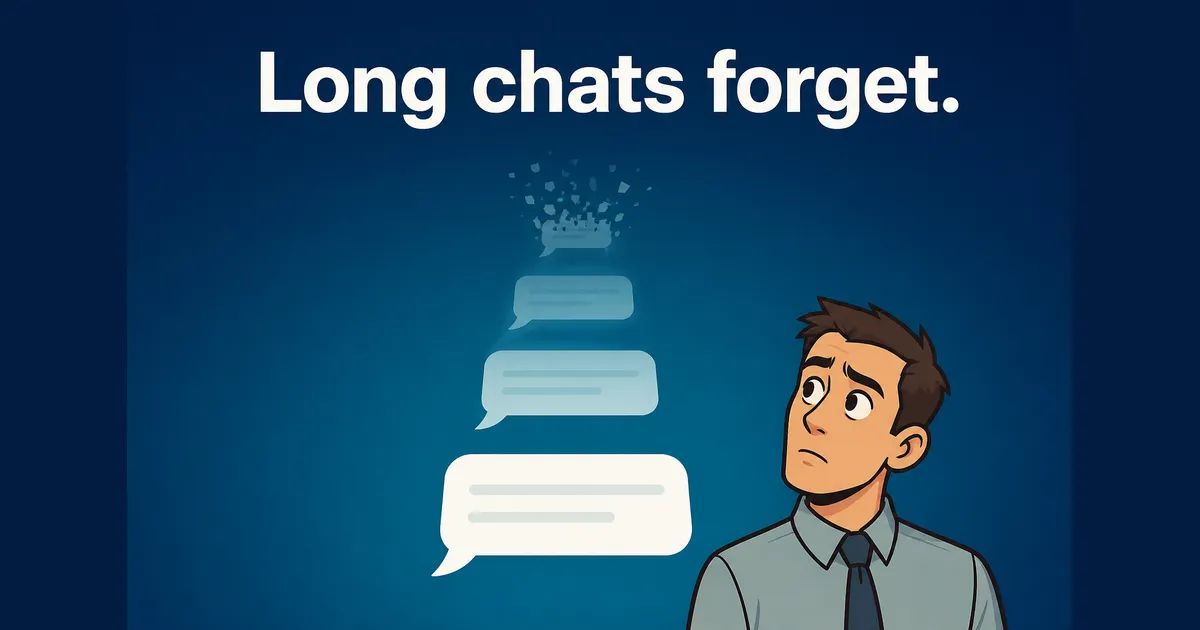
A lot of the frustration I hear about AI, and what I have experienced myself, is how you start a chat… it’s sharp for the first while, and then it slowly loses the point. It forgets an instruction from earlier. It contradicts something it told you 20 messages ago. The longer the conversation runs, the more it drifts.
Last week I wrote about starting a new course, ICM (Interpretable Context Methodology), and how the workflow lives in plain folders and text files. That post was the “what.” This next part is how it actually changes how you work.
Pass what’s needed, when it’s needed
The core move in ICM is that you never hand the AI the whole process. Each step passes only the context that step needs, and nothing else. The AI is never dragging a 40-message conversation behind it. It sees a clean, scoped task every time.
That sounds like a small thing. In practice it’s the difference between an assistant that stays on point and one that quietly wanders off.
What it looked like in practice
I’m on the 3rd of 4 modules in the course, which is where you stop following examples and start building.
It’s still early and I’m only running initial tests. What has already stood out is how the AI stayed locked on the task in front of it. The AI followed the process I had defined, step-by-step. The idea drift was gone. And because each step only saw its own slice of context, the advice it gave at every stage was on topic, not a blend of everything we’d talked about an hour earlier.
There’s a related benefit here too. When you don’t pour everything into one endless thread, the AI’s attention doesn’t get contaminated by things that no longer matter. It stays in the context of the one thing you’re working on.
The part you can use today
You don’t need the full method to borrow the idea. The next time an AI chat starts drifting, resist the urge to keep pushing in the same thread. Start a fresh one and give it only what that specific task needs. Shorter, scoped context beats one long conversation almost every time. That single habit has saved me more headaches than any clever prompt.