Taste knows something is off. It doesn't always know what.
The copy was written and the steps were all there, and the page still felt wrong. Instructional design has spent 40 years on exactly that problem, and asking for the principles turned a vague feeling into something I could work with.
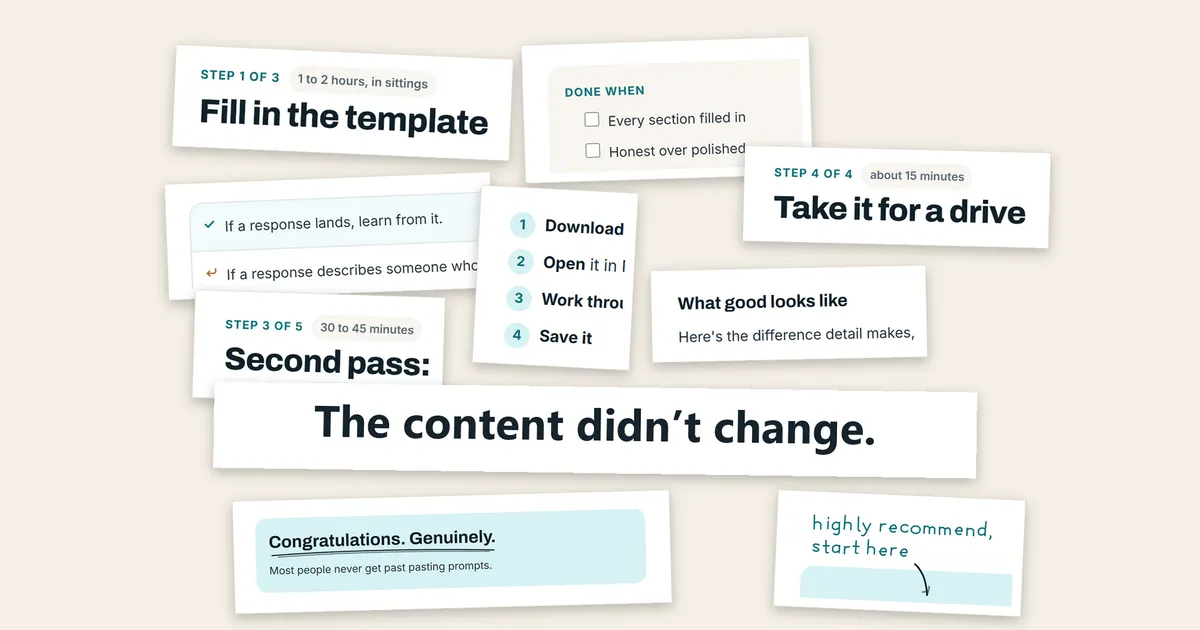
I was inches away from launching a new website, and working through some instruction pages. The copy was written. The steps were all there, in order, saying the right things.
I read it back and something was off. I couldn’t tell you what.
The usual move at that point is to start pushing words around. Change a heading, tighten a sentence, read it again, tighten another one. In this case it wouldn’t have made it better, only different.
So I asked a new question instead. “What are best practices in human learning that we can employ here to ensure a favourable and valuable outcome for those who sign up?”
And you likely guessed it. There are.
The answer was already 40 years old
Instructional design has been studying this exact case for 4 decades. Not learning in general, the narrow version: a self-directed adult following written instructions with nobody in the room to ask. It condenses down to 7 principles.
The line that got my attention wasn’t any one of them. It was the note that came with them, that my pages already did several of these by instinct, and naming them let me check for them deliberately.
That’s the whole gap, right there. Instinct got me most of the way and then handed me a feeling with no vocabulary attached. A named principle turns “this feels off” into something I can hold a page up against, section by section.
Three of them had real teeth.
Honest time expectations. People abandon a task when they can’t see how much of it is left, and they’ll push through a hard one when they know its size. Accurate framing beats cheerful underestimation, which mostly produces quitters at minute 40. My draft already said “1 to 2 hours of deep work, take it in sittings,” which turns out to be the textbook-correct thing to say. What it didn’t do was carry that honesty down to the individual steps.
Worked examples before blank pages. A completed example teaches a beginner more than a first attempt does. It’s one of the most replicated findings in the field. I had the example, a vague version sitting next to a useful one, and it was further down the page, so the blank template showed up first. The fix was placement, not writing.
A stated pass signal. Someone working alone can’t ask “is this right?”, so the page has to answer for itself. I had tests on the page. What I didn’t have, every time, was a plain statement of what good looks like and what to do when it doesn’t come out that way.
What actually changed
Bundled instructions became numbered steps, 1 action per line, verb first, with the reasoning underneath instead of in front. Every step now says where you are and roughly how long it takes, “Step 2 of 4, about 15 minutes.” The first step of each item ends with a short “done when” checklist. After each test there’s a small card with 2 rows, what it looks like when it worked, and where to go back to when it didn’t.
The congratulations moments got treated as part of the design rather than decoration, which they are. Finishing the first task is what predicts somebody will attempt the second one.
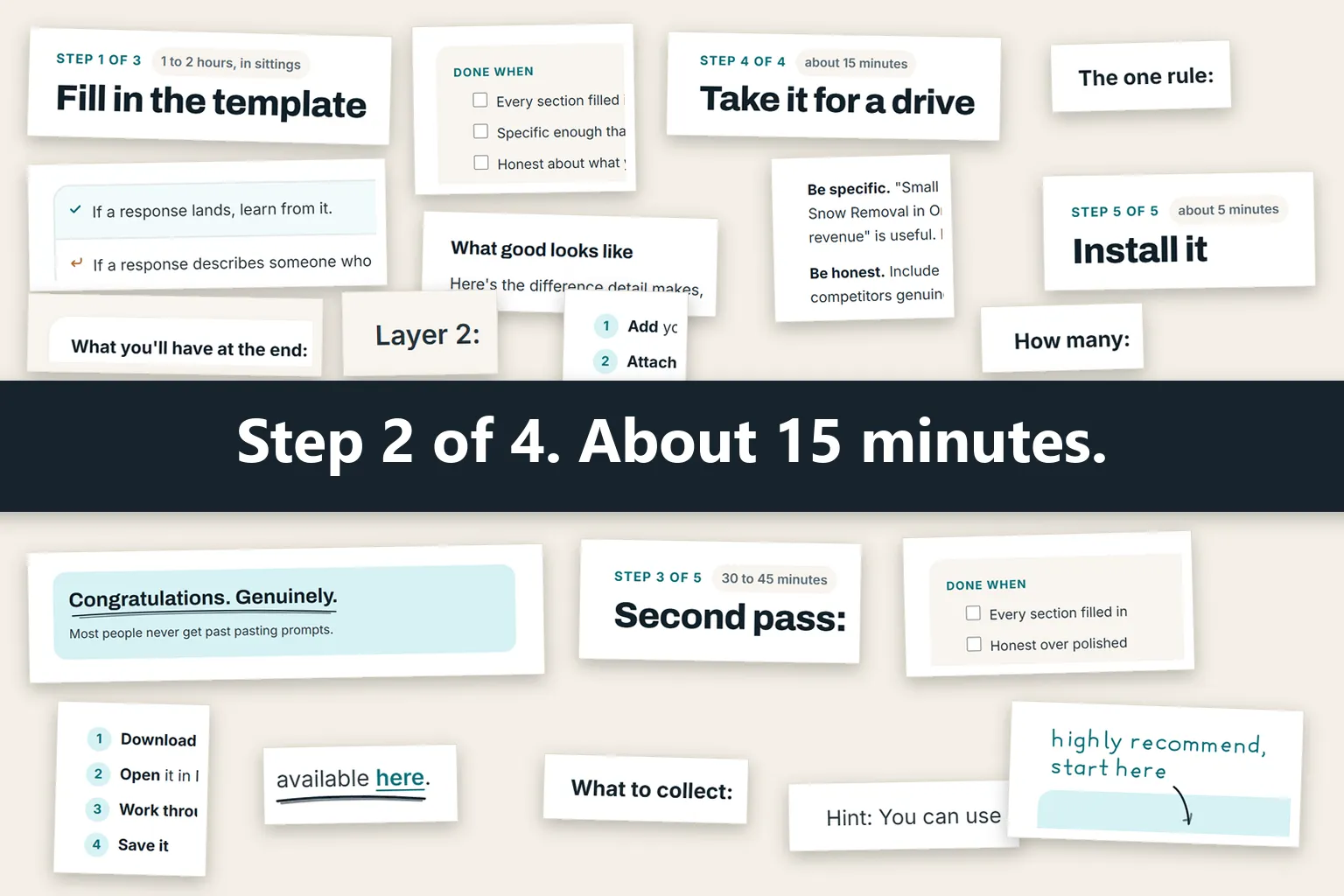
Not one fact changed in any of it. Same content, same steps, same order of operations. What changed was the shape of the thing around how a person actually moves through a page with nobody beside them.
It reads noticeably easier. I’ll be transparent about the evidence. I wrote the pages, I made the changes, and nobody else has been through them yet. I’m about as biased a reader can be!
The page teaches a method, not a topic
That line arrived at the end of the principles.
Everything on the page either moves the reader’s hands or tells them why the next move matters. Anything else, as interesting as it might be, is a candidate for cutting (or for a blog post).
It’s a clean test and an uncomfortable one, because the material it cuts is usually the material I most enjoyed writing.
Where I’d use this next
The useful part of this isn’t the 7 principles. It’s what I learned.
When something you’ve made feels off and you can’t name why, that feeling is real information and it is not a diagnosis. Whatever you’re doing, odds are good that people have studied it for decades and the vocabulary already exists. Writing instructions. Running a meeting. Onboarding somebody new. Structuring a proposal. The research is sitting there for the price of asking a better question.
And notice what I didn’t ask for. I didn’t ask for the page to be rewritten, or improved, or fixed. I asked what’s known about this kind of work. The principles came back, I read them, and I decided what each page needed. That order is the part I’d keep. Handing over the writing gets you somebody else’s page. Asking for the principles gets you a standard, and the judgment stays where it belongs.
These pages go live with the new site shortly, which is when I get to find out whether any of it holds up with people who didn’t write it…
What have you been fixing by feel that somebody has already spent 40 years studying?